Commercial buildings demand roofing systems that are durable, cost-effective, and low-maintenance. One roofing solution that consistently meets these criteria is the metal roof. Metal roofing has become a popular choice for commercial properties due to its longevity, energy efficiency, and resilience against the elements. However, installing a commercial metal roof is a complex process that requires careful planning, precise execution, and a thorough understanding of the materials involved.
The Benefits of Metal Roofing
Before diving into the installation process, it’s important to understand why metal roofing is an excellent choice for commercial properties. Metal roofs are known for their longevity, often lasting 40 to 70 years depending on the material. They are incredibly durable, able to withstand severe weather conditions, including heavy rain, snow, and high winds. Additionally, metal roofing is fire-resistant and offers excellent protection against leaks and water damage.
Another significant advantage of metal roofing is its energy efficiency. Metal roofs reflect solar radiant heat, reducing cooling costs by as much as 25%. This reflective property also minimizes the urban heat island effect, making metal roofs an environmentally friendly choice.
Pre-Installation Planning and Considerations
Successful metal roof installation begins long before the first panel is laid. Pre-installation planning is crucial to ensure that the roof meets the specific needs of the building while adhering to all relevant building codes and regulations.
The first step in the planning process is to assess the building’s structural integrity. Metal roofs are relatively lightweight, but it’s essential to confirm that the structure can support the new roofing system. This often involves consulting with an engineer or roofing specialist who can evaluate the building’s load-bearing capacity.
Next, it’s important to choose the right type of metal for the roof. Common materials include steel, aluminum, copper, and zinc. Each metal has its own set of benefits and potential drawbacks. For example, steel is incredibly strong and resistant to corrosion, making it a good choice for areas with harsh weather conditions. Aluminum, on the other hand, is lighter and more resistant to saltwater corrosion, making it ideal for coastal properties.
 Installation Process: Step-by-Step Guide
Once the planning phase is complete, the actual installation process can begin. Metal roof installation is typically carried out in several stages, each requiring attention to detail and precise execution.
1. Preparing the Roof Deck
The roof deck serves as the foundation for the metal roof, so it must be properly prepared. If the building already has an existing roof, it will need to be removed unless the new metal roof is being installed over it (a process known as a retrofit). The roof deck should be clean, dry, and free of any debris. Any damaged sections should be repaired or replaced to ensure a smooth, even surface.
2. Installing Underlayment
The underlayment is a crucial component of the roofing system, acting as a secondary barrier against water and other elements. It’s typically made from synthetic materials like polypropylene or polyethylene, which offer superior protection compared to traditional asphalt felt. The underlayment is rolled out across the roof deck, starting from the bottom and working up to the ridge. Each layer should overlap the previous one by at least six inches to ensure complete coverage.
3. Placing the Metal Panels
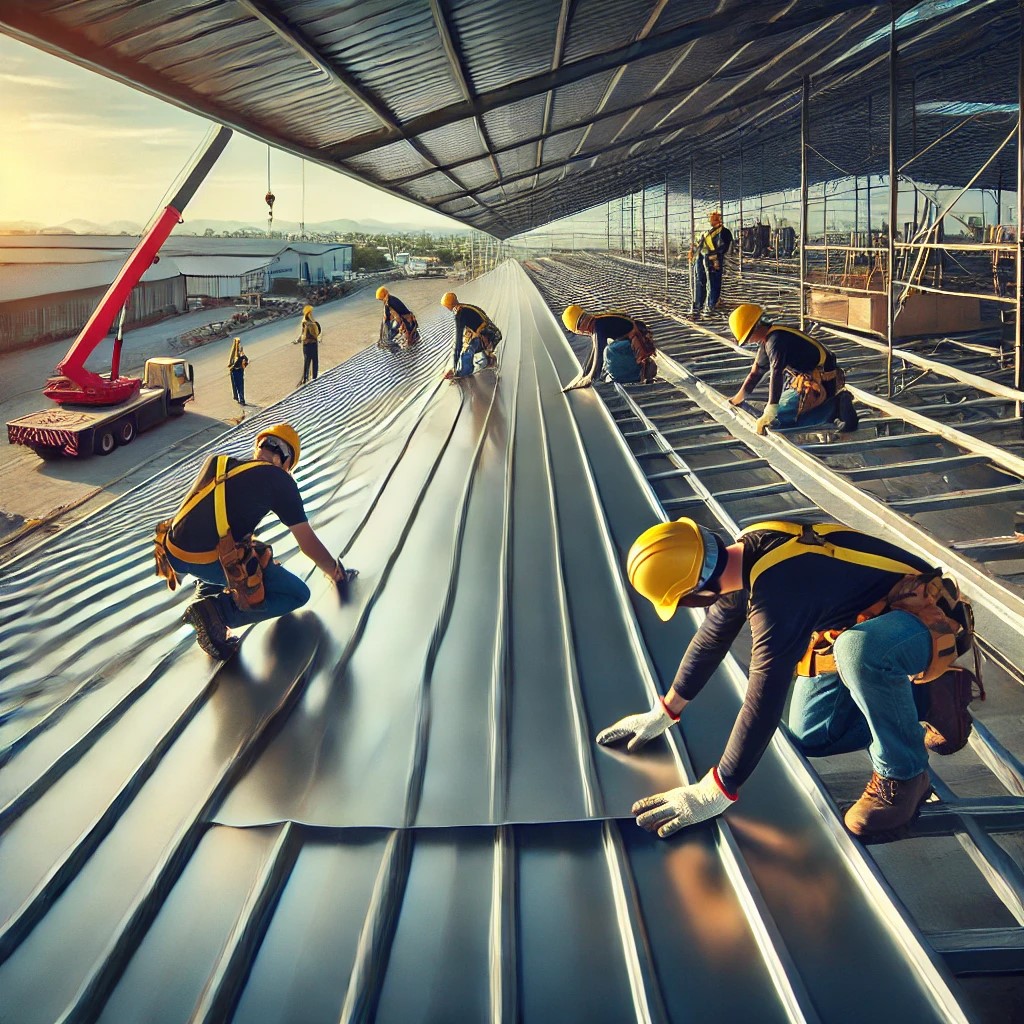
With the underlayment in place, the metal panels can be installed. This is the most critical phase of the installation process, requiring precision and careful alignment. The panels are laid out from the eaves to the ridge, with each panel overlapping the next to create a watertight seal. Fasteners are used to secure the panels to the roof deck, with care taken to ensure they are properly aligned and spaced. It’s important to use the correct type of fasteners, as the wrong kind can lead to leaks or damage over time.
4. Installing Flashing and Trim
Flashing and trim are essential components that help protect the roof’s edges and joints from water infiltration. Flashing is typically installed around roof penetrations, such as chimneys, vents, and skylights, as well as along the roof’s perimeter. Trim pieces, such as ridge caps and drip edges, are installed at the roof’s edges to provide a finished look and additional protection. Both flashing and trim must be installed with precision to prevent leaks and ensure the roof’s longevity.
5. Inspecting and Finalizing the Installation
Once all the panels, flashing, and trim are in place, it’s time to inspect the roof for any potential issues. This involves checking for gaps, misaligned panels, and loose fasteners. Any problems should be addressed immediately to prevent future issues. Additionally, the roof should be tested for water tightness, which can be done by simulating rain with a hose.
After the inspection is complete, the installation is finalized by sealing all seams and joints with a high-quality sealant. This helps to prevent leaks and ensure the roof remains watertight for years to come.
Post-Installation Considerations
Even after a successful installation, the work is not entirely finished. Maintaining a metal roof is essential to maximize its lifespan and performance. While metal roofs are relatively low-maintenance compared to other roofing systems, they still require regular inspections and upkeep.
1. Regular Inspections
It’s recommended to inspect a commercial metal roof at least twice a year, ideally in the spring and fall. During these inspections, look for signs of wear and tear, such as loose fasteners, rust, or damaged panels. Any issues should be addressed promptly to prevent them from worsening.
2. Cleaning and Maintenance
Keeping the roof clean is also important. Debris such as leaves, branches, and dirt can accumulate on the roof, potentially causing drainage issues or corrosion over time. Regular cleaning, especially after storms, can help prevent these problems. Additionally, the roof’s drainage system, including gutters and downspouts, should be kept clear to ensure proper water flow.
3. Addressing Repairs Promptly
Even with the best installation practices, repairs may be needed over time. Whether it’s due to severe weather, accidental damage, or normal wear and tear, it’s crucial to address any issues promptly. This might involve replacing damaged panels, reapplying sealant, or tightening loose fasteners. Timely repairs can prevent minor issues from turning into major problems, saving money and extending the roof’s lifespan.
Choosing the Right Contractor
Given the complexity and importance of commercial metal roof installation, choosing the right contractor is crucial. A qualified, experienced contractor will ensure that the roof is installed correctly, providing peace of mind and protecting the building for decades to come.
When selecting a contractor, consider their experience, certifications, and reputation. It’s also a good idea to ask for references and examples of previous work. A reputable contractor will provide a detailed estimate and timeline, and they should be able to answer any questions you have about the installation process.
In the end, a well-installed metal roof is an investment that can pay off in numerous ways, from reduced energy costs to enhanced property value. By following best practices and choosing the right professionals for the job, you can ensure that your commercial building is protected by a roof that will stand the test of time.
For additional information about Commercial Metal Roof Services, view our blog entries here!
Find out more information on metal roofing for commercial buildings. Visit our sister website, Armadillo Roofing.
Related service: Learn more about our commercial metal roof installation services in Austin and nearby communities.