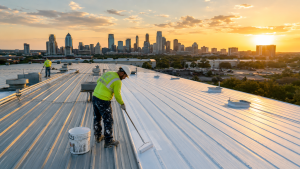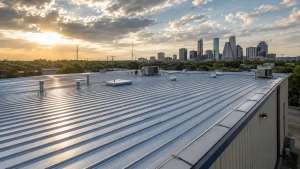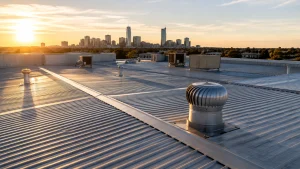
When a commercial metal roof starts failing, repair, restoration, and replacement aren’t interchangeable options. Each one addresses a specific condition. Choosing the wrong path costs more than choosing the right one at a higher price. The substrate condition tells you which path is correct. The contractor’s preferred service offering should not be the deciding factor.
Key Takeaways
- Repair, restoration, and replacement each address a different roof condition. Matching the solution to the actual state of your system protects both the building and the budget.
- A leak is a symptom. Substrate condition, fastener integrity, and how far moisture has traveled determine the correct response.
- Austin’s thermal cycling and UV intensity create specific, predictable failure patterns in commercial metal roofing systems.
- Deferring a decision is itself a decision, and it compounds the eventual cost every season it goes unmade.
- Armadillo Metal Roofing begins every project with an on-site inspection and presents up to three solution options before any recommendation is made.
Why Do So Many Property Owners End Up With Only One Option on the Table?
Most commercial roofing contractors are built around a single service. A company organized around installation crews and material supply relationships defaults to replacement. A company focused on coating products defaults to restoration. That’s not necessarily dishonesty. It’s the natural result of having only one tool available.
The outcome is predictable. A property owner or facility manager receives a single quote for a single solution, and that number starts to look like the obvious answer because it’s the only number that got written down. It isn’t the obvious answer. It’s just the only one that showed up.
Mark Franz founded Armadillo Metal Roofing after spending 20 years as a Facilities Manager for Fortune 500 corporations, where he sat across the table from contractors and fielded single-option recommendations on buildings he was responsible for protecting. That experience shaped the company’s founding approach: on-site inspection first, full condition assessment second, and up to three solution options presented before any recommendation gets made.
When a contractor arrives with one recommendation already formed, you’re not getting an assessment. You’re getting a sales call.
What Does a Thorough Roof Assessment Actually Cover?
It starts on the roof. Not the parking lot, not a phone call, not a quick look from a drone feed.
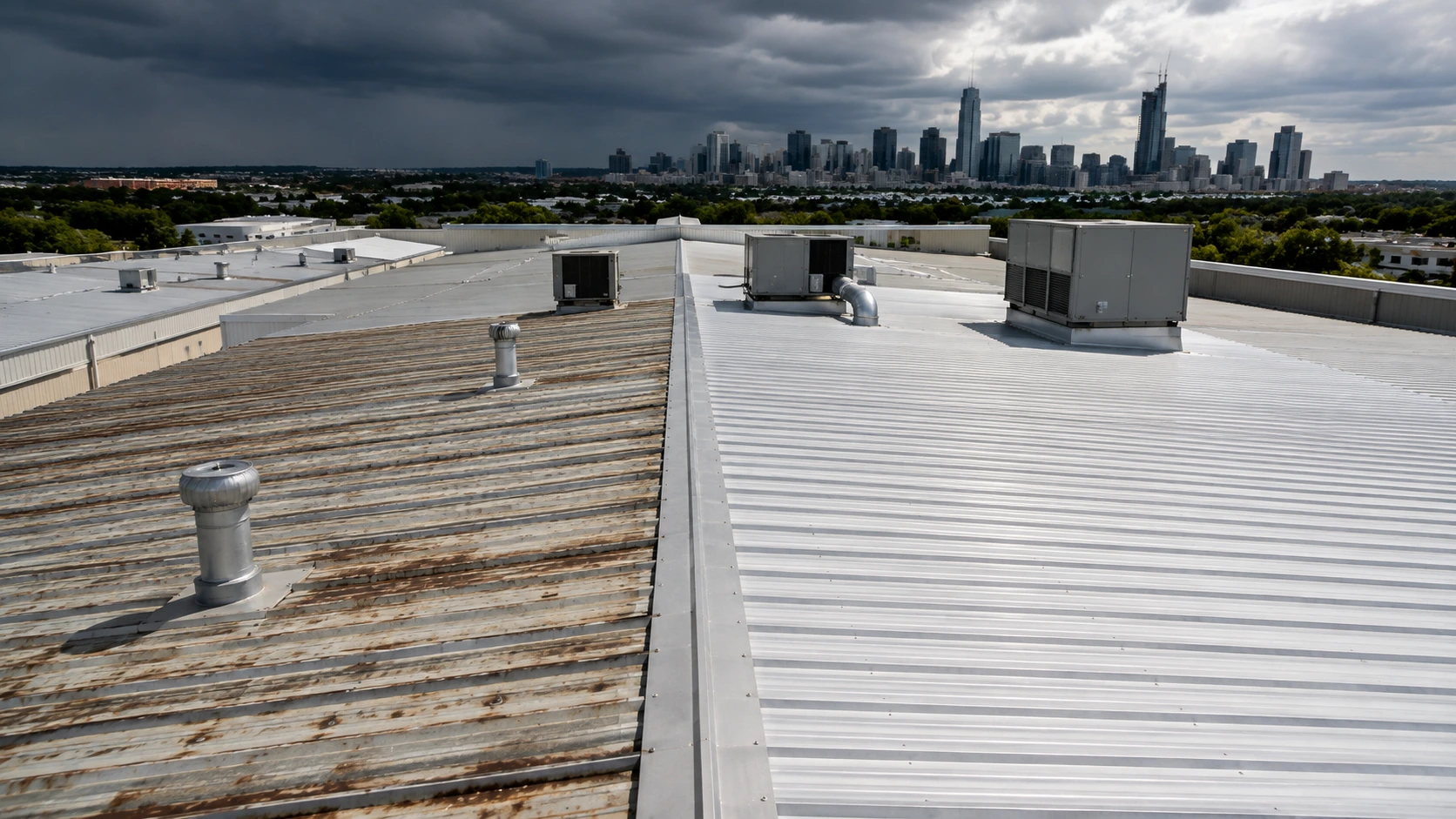
A real evaluation covers substrate adhesion quality across the full panel field. It examines fastener condition and whether thermal movement has worked them loose from their seating over time. It looks at seam integrity, surface rust progression and whether that rust has stayed cosmetic or advanced to actual panel rust-through, ponding patterns and drainage performance, and the condition of every penetration seal around mechanical curbs, pipe boots, and skylights.
None of that information is visible from the ground.
A quote produced without an actual on-site inspection is a guess formatted to look like a proposal. The substrate condition is what determines the correct path forward, not the contractor’s service preference, not the building’s age, and not what the last contractor quoted.
Armadillo Metal Roofing carries a 5/5 rating on Google because clients consistently report getting a straight answer about what their building actually needed rather than a default recommendation with a dollar figure attached. Mark Franz, who holds a Finance degree from the University of Texas and brings 18 years of hands-on commercial metal roofing experience alongside his prior 20 years in facilities management, provides direct oversight on every project with that same standard.
The Three Paths: Which One Fits Your Roof’s Actual Condition?
Targeted repair is the right call when the failure is localized and the surrounding substrate is still performing. A seam that thermal cycling has opened over repeated seasons, a penetration seal that has dried and cracked, a panel section damaged by hail or falling debris. The rest of the system is sound. Repair addresses the specific failure without disturbing what’s already working.
Restoration and recoating applies when the metal substrate is aging but remains structurally intact. The critical test is substrate adhesion: can the existing panel support a properly applied coating system? If the answer is yes, and there’s no widespread rust-through or structural panel failure, commercial metal roof restoration is a legitimate long-term intervention rather than a temporary fix.
The process addresses seams, fasteners, and surface degradation across the full roof in one coordinated system. Surface preparation has to meet the coating manufacturer’s specifications or the application fails early. That prep work is where most shortcuts happen, and it’s where most early coating failures originate. When surface preparation is done correctly on a genuinely viable substrate, restoration extends the service life of the system in a real and durable way.
Full replacement or new installation is the right answer when the substrate itself has failed. Rust-through at the panel level, widespread structural deformation, deck damage from sustained moisture intrusion, or a history of repeated patching that never addressed the underlying failure. A coating system applied over a failed substrate has nothing solid to bond to, and the result is a failed coating on top of a failed roof.
Commercial metal roof replacement is also the honest call when the preparation work required to restore a borderline substrate approaches the cost of a new system. At that crossover point, replacement purchases a full service life for a comparable investment.
For new construction or for properties transitioning from an aging membrane or built-up system to metal, commercial metal roof installation is the appropriate starting path. Final inspections verify workmanship, weather protection, and long-term performance before the project closes.
How Austin’s Climate Creates Predictable Failure Patterns in Commercial Metal Roofs
Austin doesn’t give commercial metal roofs an easy operating environment.
Thermal cycling is the primary mechanical stressor. Panels expand as temperatures climb through the morning and contract as temperatures fall overnight. Over years of repeated movement, seam connections fatigue and fasteners work loose from their backing plates, creating water entry points that aren’t detectable from the ground. By the time a ceiling stain appears inside a building, moisture has often been traveling through insulation and decking for weeks before it surfaces anywhere visible.
Austin’s UV intensity accelerates coating degradation at a pace that would surprise property owners comparing manufacturer service-life charts written for more temperate climates. The practical effect is that the restoration window can close faster than expected. A substrate that qualified for restoration a couple of seasons ago may have crossed into replacement territory if repeated moisture intrusion has compromised panel integrity or the deck beneath it.
This is why timing matters more than the question “how bad does the leak look right now?” The real question is how much of the system is still performing.
If a storm has already caused active damage, emergency metal roof repair is the first priority. Stop active damage before evaluating the long-term path. Armadillo Metal Roofing is available 24/7 for emergency situations and provides insurance claim assistance to help property owners document damage accurately before filing or negotiating a claim.
Acting vs. Waiting: What Each Decision Actually Produces
This table compares outcomes, not price tags. The question isn’t which option costs the least today. It’s what each decision actually produces for the building over time.
| Decision | When It Applies | What You’re Actually Getting |
|---|---|---|
| Targeted Repair with Armadillo | Isolated failure on a sound, performing substrate | Specific failure resolved, rest of system preserved, no unnecessary scope |
| Restoration with Armadillo | Aging but structurally viable substrate | System-level life extension built on a properly prepared foundation |
| Full Replacement with Armadillo | Failed substrate or genuinely end-of-life system | New system, clean starting point, full service life ahead |
| Deferred Action | “We’ll revisit this next season” | Compounding moisture damage, narrowing options, larger and more expensive project when you eventually act |
The bottom row is consistently the most expensive outcome. Moisture entering the building envelope through an active failure degrades insulation, decking, and interior finishes with every rain event. A substrate that qualifies for commercial metal roof restoration today may not qualify by the time you revisit it, which means the eventual project is larger and more expensive than acting now would have been.
Waiting isn’t neutral. It’s a decision with a price attached, and that price grows.
The full range of metal roofing services at Armadillo Metal Roofing exists to make sure all three paths get evaluated before a decision gets made.
Where Restoration Has Real Limits
Restoration isn’t the right answer in every situation. Being direct about that is part of doing the work correctly.
Consider a typical scenario: a building owner defers an inspection for two or three seasons after noticing a slow interior stain. By the time an assessment happens, what might have been a straightforward restoration candidate has progressed to rust-through at several panel locations and measurable softening in the deck from sustained moisture exposure. Applying a coating system over that substrate is asking it to do something it can’t do. Structural integrity can’t be restored with a coating. The honest answer in that situation is replacement, and recommending restoration instead to avoid the higher upfront conversation produces a worse result faster.
The substrate condition determines the path. Not the contractor’s preferred service, not what the building owner was hoping to hear.
Frequently Asked Questions
How do I know whether my commercial roof needs restoration or replacement?
The answer requires an on-site inspection. Two buildings with metal roofs installed in the same year can be in completely different condition depending on maintenance history, drainage performance, and weather exposure. A qualified inspector needs to evaluate substrate adhesion, fastener condition, panel integrity, and how far any moisture intrusion has traveled. Age provides a rough reference point. Substrate condition provides the actual answer.
Is restoration a real long-term solution or just a way to delay replacement?
When surface preparation meets the coating manufacturer’s specifications and the substrate is structurally sound, restoration is a genuine system-level intervention. The process addresses seams, fasteners, and surface degradation across the entire roof in one coordinated effort. Applied correctly to a viable substrate, it’s a real extension of the system’s service life. Applied over a failing or inadequately prepared substrate, it fails early and leaves the underlying problem unaddressed.
What happens if I wait another season before making a decision?
Waiting carries a cost that compounds with each rain event. Moisture entering the building envelope through an active failure is degrading insulation, decking, and interior finishes continuously. A substrate that qualifies for restoration today may deteriorate past that threshold before you revisit it, meaning the eventual project is larger and more expensive than acting now would have been. Deferring isn’t a neutral position. It’s choosing the most expensive path by default.
Can metal roofing be installed on an existing commercial building outside of new construction?
Yes. Metal roofing systems can be installed on existing commercial structures, including in some cases over existing roofing depending on the building’s structural load capacity and the condition of the current deck. Whether that requires a full tear-off or an over-installation is determined by the on-site assessment. This is a common path for commercial property owners replacing aging membrane or built-up systems with a metal alternative.
How does Austin’s climate specifically affect commercial metal roofs?
Thermal cycling is the primary mechanical driver. Daily temperature swings cause metal panels to expand and contract repeatedly over the life of the system. That repeated movement fatigues seam connections and works fasteners loose, creating water entry points that aren’t detectable from ground level. Austin’s UV intensity also accelerates coating degradation faster than the same system would experience in a more temperate climate, which means commercial roofs in this market often need professional attention sooner than general manufacturer service-life timelines suggest.
What should I ask a contractor before accepting a replacement recommendation?
Ask them to walk you through the assessment that produced it. Specifically: what is the substrate condition, where are the failure modes and what’s causing them, and why won’t restoration or targeted repair address those specific conditions? If the contractor can’t answer those questions with details from an actual on-site inspection, you don’t have a diagnosis. You have a default recommendation formatted to look like one.
Does Armadillo Metal Roofing assist with insurance claims for storm damage?
Yes. If a commercial roof has sustained storm or hail damage, having a professional assessment documented before filing or negotiating a claim protects your position. Getting an inspector on-site quickly after a weather event matters both for stopping active damage and for building an accurate record of what the storm actually caused. Armadillo Metal Roofing provides insurance claim assistance and is available 24/7 for emergency estimates and urgent repairs across the Greater Austin area.
The roof that costs the most isn’t always the one that gets replaced. It’s often the one where the decision got made from a single recommendation that was never backed by a real assessment.
If you manage or own a commercial property in the Greater Austin area and want a straight answer about what your building actually needs, contact Armadillo Metal Roofing to schedule an on-site inspection.
Mark Franz is the owner and founder of Armadillo Metal Roofing, a fully licensed, insured, and bonded commercial metal roofing company serving the Greater Austin area. A native Austinite with 46 years of roots in the city and a Finance degree from the University of Texas, Mark brings 18 years of hands-on commercial metal roofing experience alongside 20 years spent as a Facilities Manager for Fortune 500 corporations. He provides direct oversight on every project with a single standard: work done right the first time.